Family Leadership Getting Your Chicld to Do the Right Thing
What leader are you? It depends on your parents
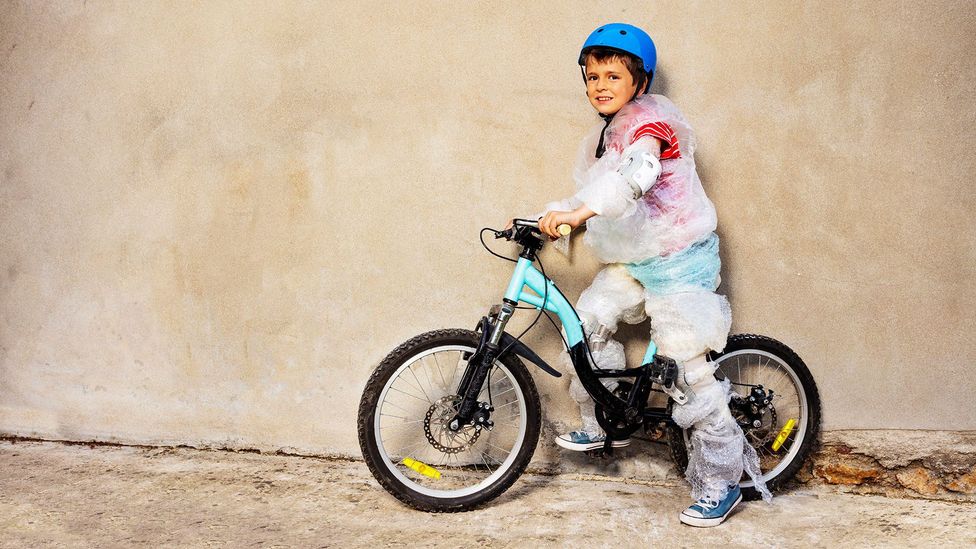
Your parents' good intentions might take undermined your confidence – just you tin can do something nearly it.
Y
You've probably noticed how some of your colleagues take to leadership roles like a duck to water. They're confident telling others what to practice, and happy taking on an ever-growing number of responsibilities. It couldn't be more than dissimilar for others: bossing effectually people feels awkward, and a nagging cocky-doubt shadows every decision.
If you're in the latter group, you might wonder why the thought of being a leader fills y'all with dread, and why you lot find it so difficult to even see yourself equally a manager.
As with about any attribute of human nature, some of the answer comes down to your genetically inherited disposition. If your parents were shrinking violets, the odds are increased that you will be too. But that's far from the whole story. Increasingly, psychologists are realising the important office that early life experiences play. And key here is the way your parents behaved toward y'all.
In particular, if they were overly protective they might have undermined your chances of becoming a future leader. Colloquially, this parenting approach is known equally 'helicopter parenting' in reference to the thought of hovering nearby whether needed or not.
Your parents likely had practiced intentions, such equally ensuring you didn't face uncomfortable challenges. Unfortunately this might have had some inadvertent, unhelpful effects, including "making yous less confident and less capable of facing difficulties, therefore [leading y'all to] exhibit poorer leadership skills", says Dr Judith Locke, a clinical psychologist in individual do and visiting beau at Queensland Academy of Technology.
Locke's research has involved surveying parenting professionals, including psychologists and school counsellors, to establish exactly what they mean by helicopter parenting or overparenting.

Helicopter parents can cause unexpected impairment – overparenting signals to children that they're not trusted to look later themselves, let alone others (Credit: Getty Images)
Her findings propose this is an approach characterised past a mixture of three factors: beingness extremely responsive to the child, being extremely undemanding in some contexts, even so being highly demanding in others. For instance, a helicopter parent is likely to exist overprotective, overly attentive and believe their kid is ever correct. They will effort to practise everything for their child (rather than expecting the kid to handle it themselves), and might expect their child'due south peers and schoolhouse to bend over backwards to accommodate their child's needs too. At the same time, this kind of parent volition be highly demanding, in the sense of having high expectations for their child'southward achievements, overscheduling their kid's time and wanting their kid to exist their friend and in constant contact.
Supervised into submission
The latest inquiry on how this farthermost coddling tin stifle leadership skills comes from Prc. Psychologists surveyed nearly 1,500 teenagers – average age 14 – at 13 schools in Beijing. Yufang Bian at Beijing Normal University and her colleagues assessed the teenagers' leadership potential comprehensively. First they quizzed the teenagers' peers, teachers and parents to get a sense of whether they were seen by others as existence a practiced leader. Second, they checked whether the teenagers were actually in whatever leadership roles, such every bit being a team leader in a course science group or a president in a student club.
Meanwhile, the teenagers rated how much their parents had been overprotective by agreeing or disagreeing with statements such equally 'My parents supervised my every move growing up' and 'My parents ofttimes stepped in to solve life problems for me'. The teens also took quizzes measuring their cocky-esteem and how confident they felt about existence a leader.
After controlling for the influence of a number of other factors, such every bit family socioeconomic groundwork and the teenagers' academic achievements, Bian and her team found a clear design. The more than overprotective their parents, the less the teens were perceived as having leadership potential by others, and the less likely they were to really be in leadership roles. Statistically, this link was explained by the fact that the teens with helicopter parents tended to take lower self-esteem, which in turn was associated with being less confident about beingness a leader.

Teens with lower self-esteem might be tempted to rate their parents unfavourably – but the results are consistent with before enquiry (Credit: Alamy)
Bian and her squad said their findings support the thought that also much of a good thing tin can be harmful: "In the same way that a lack of proper parenting harms a child's development, overparenting, with its restriction of the child's development of autonomy and problem-solving skills, also has a negative touch on on psychosocial development."
Overparenting may also create this undermining effect considering it signals to children that they are non capable of independence and that their parents don't trust them to expect after themselves, allow alone others.
It is worth mentioning that these new findings should exist interpreted with circumspection because the observational design of the study means it hasn't proved that helicopter parenting causes a lack of emerging leadership potential. The inquiry relies on teenagers retrospectively recalling their parents' behaviour, and it's possible that teens with lower self-esteem might be tempted to rate their parents unfavourably as a manner to explicate their electric current feelings. However, the results are consistent with a causal interpretation and the researchers build on a wealth of earlier research, which has consistently shown the apparent detrimental effects of having overprotective parents, admitting that these studies have also featured an observational design.
For case, psychologists at Florida State University surveyed nigh 500 undergraduates and institute that those who had helicopter parents also tended to exist less confident in their own abilities. A different team at Miami University quizzed hundreds of undergraduates and found similar results. Those who described having helicopter parents as well tended to have more emotional problems, struggled with making decisions and performed worse in their exams.

Some surveys institute those with helicopter parents were less confident in their abilities and struggled with controlling and exams (Credit: Getty Images)
Your future every bit a leader
If yous run a mile from leadership opportunities and recognise the description of having helicopter parents, y'all don't have to accept that yous'll never be a leader or exhibit qualities of ane.
First, recall your parents' arroyo was probable well intentioned, and yous won't benefit from feeling resentful. You're in control now and, with dedication and effort, it'due south possible to shape your own traits and attitudes at any time of life.
Locke, who is also the writer of The Bonsai Child (a parenting book to assist parents develop their child's potential by non overparenting), recommends start to take more control over your own life, including being more financially independent if you can, and fugitive the temptation to telephone call your parents each fourth dimension you take a problem.
"Many readers will have parents however wanting to be highly involved in their lives. Work out a way where y'all manage your own life more and end to rely on your parents equally much," she says. Of course, these changes on their ain won't transform y'all into a leader, but they will help yous to see yourself as contained and to be more comfortable making autonomous decisions, which will serve you lot well if and when leadership opportunities arise in your career.
You can too brand changes at work, including trying to be more open to criticism, and existence proactive in seeking feedback. "My piece of work shows that those who have been overprotected have often been overpraised as a matter of course, and don't cope likewise with constructive criticism," says Locke. "For you to improve you need to be open up to suggestions of what you need to do to progress."
It won't happen overnight, but through practising beingness more than contained and taking the time and attempt to build your emotional and decision-making skills, you volition discover that you can slowly build your confidence – and even start to come across yourself as a potential boss.
Dr Christian Jarrett is a senior editor at Aeon magazine. His next book, most personality change, will exist published in 2021.
Source: https://www.bbc.com/worklife/article/20200406-what-leader-are-you-it-depends-on-your-parents
0 Response to "Family Leadership Getting Your Chicld to Do the Right Thing"
Post a Comment